
Growing the Field – Developing Capacity in Florida’s Ecosystem of Advocates Addressing Heirs Property
The infrastructure is coming together. Here's who's building it and how.

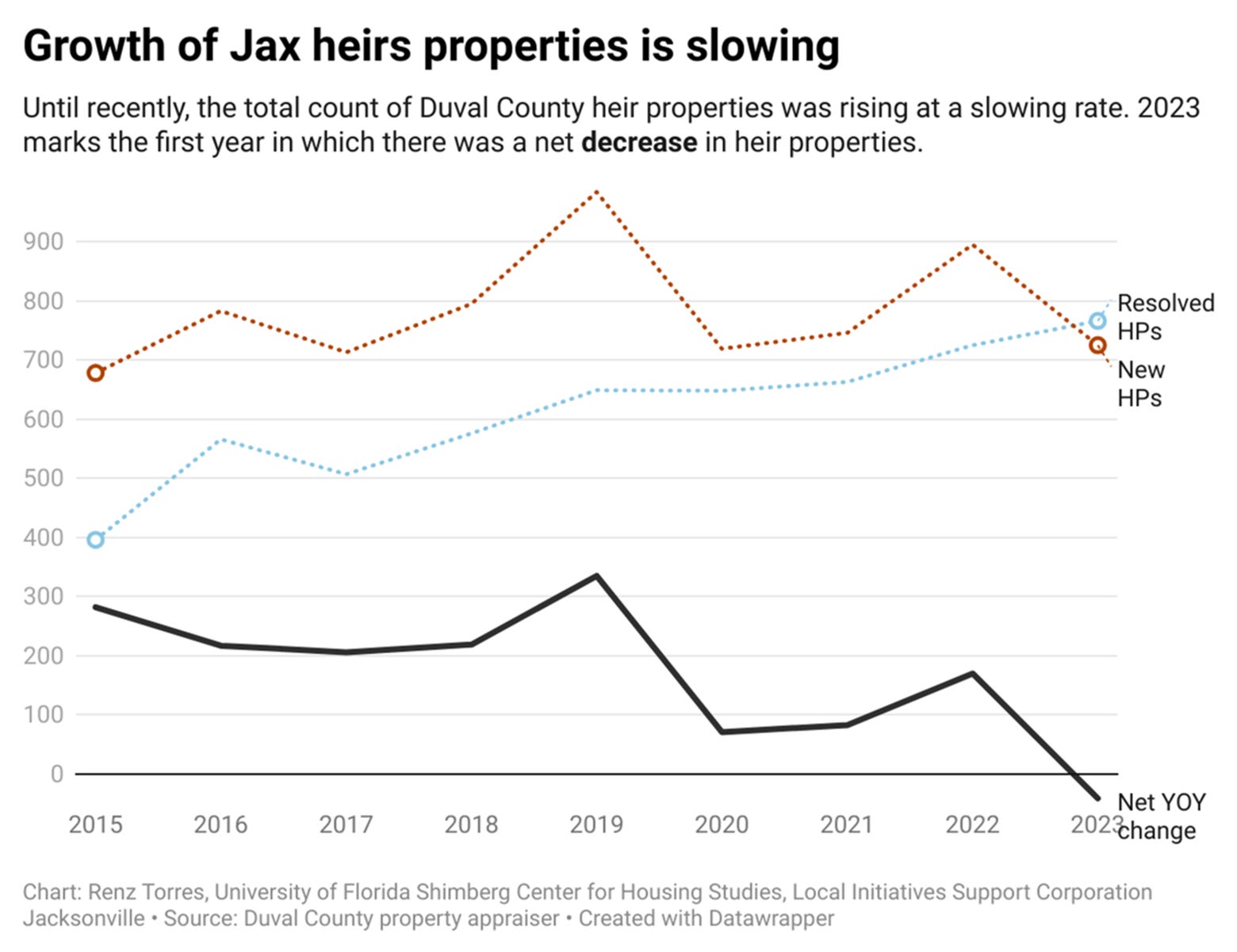
For years, heirs property eroded family security and neighborhood stability. Today, thanks to the persistent work of advocates who continued to push for change, it has become a shared target for resources, coordinated strategy, and real solutions.
To be sure, heirs property is gaining national attention. In 2024, the National Consumer Law Center published a landmark report urging stronger legal strategies to prevent families from losing homes held as heirs property. The Urban Institute has shown that heir-owners are often excluded from repair assistance, tax relief, and lending. Congress has also introduced the HEIRS Act, which would provide federal support to help families clear title. In 2024, LISC launched a national heirs property initiative, building on its Jacksonville model and expanding to Richmond, Detroit, Atlanta, San Antonio, and the Mississippi Delta.
As awareness grows and more resources come online, it’s critical that practitioners entering the field have access to best practices and peer support as they learn and grow. The tools and knowledge to help them exist. The goal now is making sure the right people have both.
What Is Heirs Property?
Heirs property is what happens when a homeowner dies without a will, and their property passes informally to surviving family members without the estate ever going through probate. The result is a home that belongs, legally speaking, to a fractional collection of co-owners who may never have sat down together to acknowledge it.
The consequences are severe and compounding:
Families can’t access their own equity. Without clear title, heir-owners are ineligible for most loan products, refinancing, and home repair financing.
Tax benefits disappear. Families lose homestead exemptions, which can lead to rising tax burdens and eventually tax foreclosure.
Disaster relief becomes inaccessible. After a hurricane or flood, heirs property owners are frequently denied FEMA assistance because they cannot prove legal ownership of the home they’re living in.
Consider a family in Tampa who had lived in their grandmother’s home for thirty years. When a roof leak became a structural problem, they applied for a repair loan and were turned away because they couldn’t get all of the co-owners to be involved. The grandmother had died without a will. Eleven heirs were on the title, scattered across three states, and none had the legal standing to borrow against a home they had maintained, insured, and paid taxes on for decades. Stories like this one are not outliers. They are the norm in the heirs property world.
The Florida Heirs Property Practitioners Learning Exchange
Seeing the growing confluence of need around heirs property on the local level, how deeply these issues were affecting Florida communities and the capacity building goals of organizations entering the space, NeighborWorks Florida Collaborative convened a group of statewide partners to create a structured container for organizations working to grow their capacity, sharpen their approaches, and deepen their relationships around this issue.
At the center of that effort is a formal collaboration between three anchor organizations.
The NeighborWorks Florida Collaborative (NWFLC) coordinates and facilitates the Learning Exchange itself, managing project logistics, convening partners, and serving as the central hub connecting practitioners across the state.
LISC Jacksonville brings the deep practitioner expertise built through years of on-the-groundwork, providing toolkits, technical assistance, and hands-on support for county-level implementation. Its role is part mentor, part model: sharing what works and helping others replicate it.
The Florida Housing Coalition (FHC) leads statewide data collection, policy research, and advocacy, while working to strengthen the connections between local practitioners and their municipal partners.
The Learning Exchange launched with four participating organizations, each with a long-standing commitment to community development: the Community Development Corporation of Tampa, Community Partners of South Florida, the Gainesville Neighborhood Housing Development Corporation, and Tampa Bay Neighborhood Housing Services.
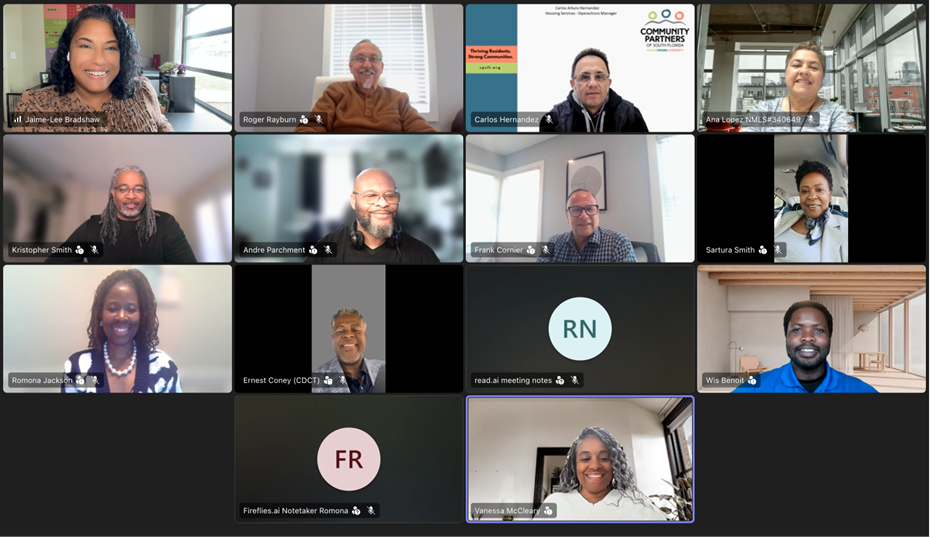
While each cohort member is at a different stage in its heirs property work, all bring a solid foundation and demonstrated investment in the communities they serve. An initial self-assessment conducted across the four organizations surfaced several shared challenges.
Three of the four identified a lack of shared data systems as a top barrier, making it the single most common structural constraint across the cohort.
An equal number pointed to unclear roles and responsibilities between partners, underscoring the need for formal agreements and greater role clarity before any of these organizations can meaningfully scale.
Funding constraints were named by two of the four, suggesting an opportunity for the collaborative to actively facilitate shared grant strategies.
The gaps and barriers these organizations face are not unique to them. They reflect the challenges that nonprofits and community organizations across Florida are running into as they try to build this work. That is exactly the problem the LISC Jacksonville Implementation Playbook was designed to help solve.
Bridging the Gaps: The LISC Jacksonville Implementation Playbook
LISC Jacksonville has spent years building an ecosystem approach to heirs property, bringing together housing counseling agencies, legal aid, estate planning partners, and community organizations under a shared system. That hands-on experience, developing, piloting, testing, and refining tools and approaches in real communities, is what makes their model worth replicating. The Jacksonville playbook is now the blueprint the Learning Exchange is working to adapt and spread across Florida.
The Implementation Playbook compiles the resources needed for an effective heirs property community ground game. It translates LISC’s heirs prevention and wealth preservation framework into action-ready guidance for local agencies, organized around four areas: integrated data use, estate planning outreach, workflow integration, and local and state policy advocacy. At the center of it is the idea that regardless of which county a resident lives in or which organizations are involved locally, every person should move through the same coherent system. The Playbook defines five stages that make that possible.
Find and invite — Using neighborhood data, trusted messengers, and community institutions to reach households most likely living with heirs property risk.
Triage and route — Quickly sorting each case into prevention, resolution, or crisis and assigning it to the right partner within 72 hours for urgent situations.
Educate and commit — Using workshops and one-on-one counseling to cut through confusion and make sure every household leaves with a specific next step.
Resolve and stabilize — Supporting families through wills, probate, title cleanup, tax relief, insurance, and home repair.
Preserve and grow — Connecting stabilized households to lending, homebuyer assistance, or planning for how the property passes to the next generation.
None of this works, however, without knowing where to start. That is the challenge data tools like Project Guardian were built to solve.
Project Guardian™: Seeing What Was Previously Invisible
One of the most innovative elements of the Learning Exchange is Project Guardian™, a data platform developed by Smart North Florida that gives practitioners something they have rarely had: the ability to identify likely heirs property and title instability risk before a crisis occurs. By translating publicly available property and land record data into clear, actionable decision-support tools, it turns what was once invisible into something practitioners can see, map, and act on.
In turn these mapped conditions add gravity and possibility for making the case to partners, funders, and local government that the need is real, the scale is significant, and the moment to act is now. While efforts to map and quantify heirs property are growing across the country (including collaborations from University of Florida GeoPlan Center and the Florida Housing Coalition), Project Guardian™ is among the most practice-ready tools the field has produced that participants are excited to deploy in their work.
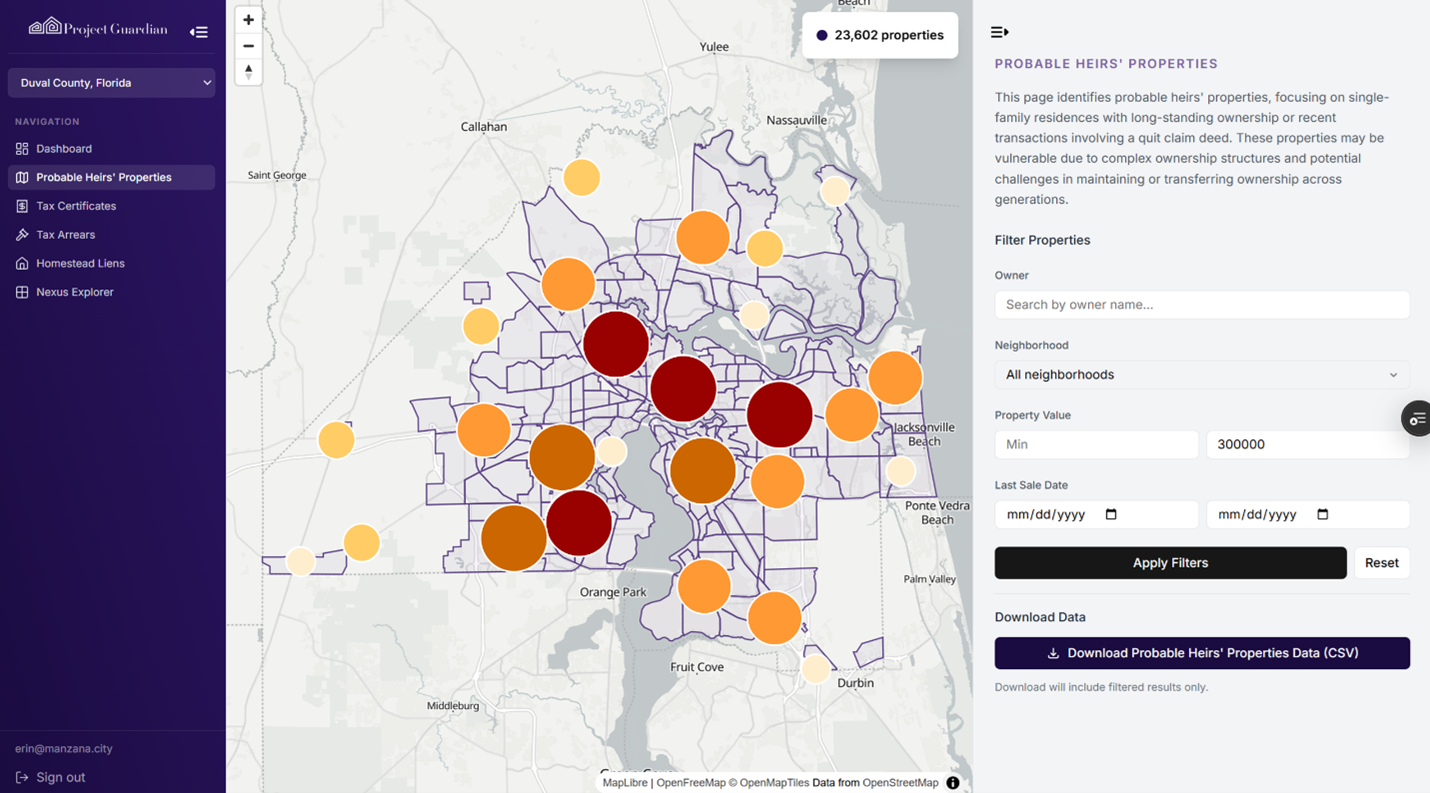
To learn more about how LISC Jacksonville is partnering with Project Guardian™ for data-informed impact check out this article!
What Comes Next
The Florida Heirs Property Practitioners Learning Exchange is still early in its work. It is a small, focused convening of practitioners operating within a much wider statewide network of organizations, advocates, and systems working to address this problem at scale. Over the coming months, participating organizations will go deeper together: sharpening their practice, gaining access to Project Guardian™ data tools, and focusing their energy on one core goal: growing the pipeline of families who are connected, through warm referrals, to the legal, financial, and social supports they need to secure their property and protect what they have built.
For families across Florida, the stakes are deeply personal. A cleared title can mean access to a home repair loan before a roof fails. It can mean avoiding tax foreclosure. It can mean that when a hurricane comes you don’t have to fight for disaster relief while also grieving a loss. When families stabilize, communities stabilize. That is the work.
We know that there are many more advocates and organizations on the ground increasingly seeing the visibility of this issue. While the current cohort is already in motion, the larger aim is to continue to build a shared space for practitioners in Florida to learn and exchange. So, if you’re already in the weeds on heirs property or interested in staying connected with other practitioners who are doing the work, let us know!
 | A guest post by
|